
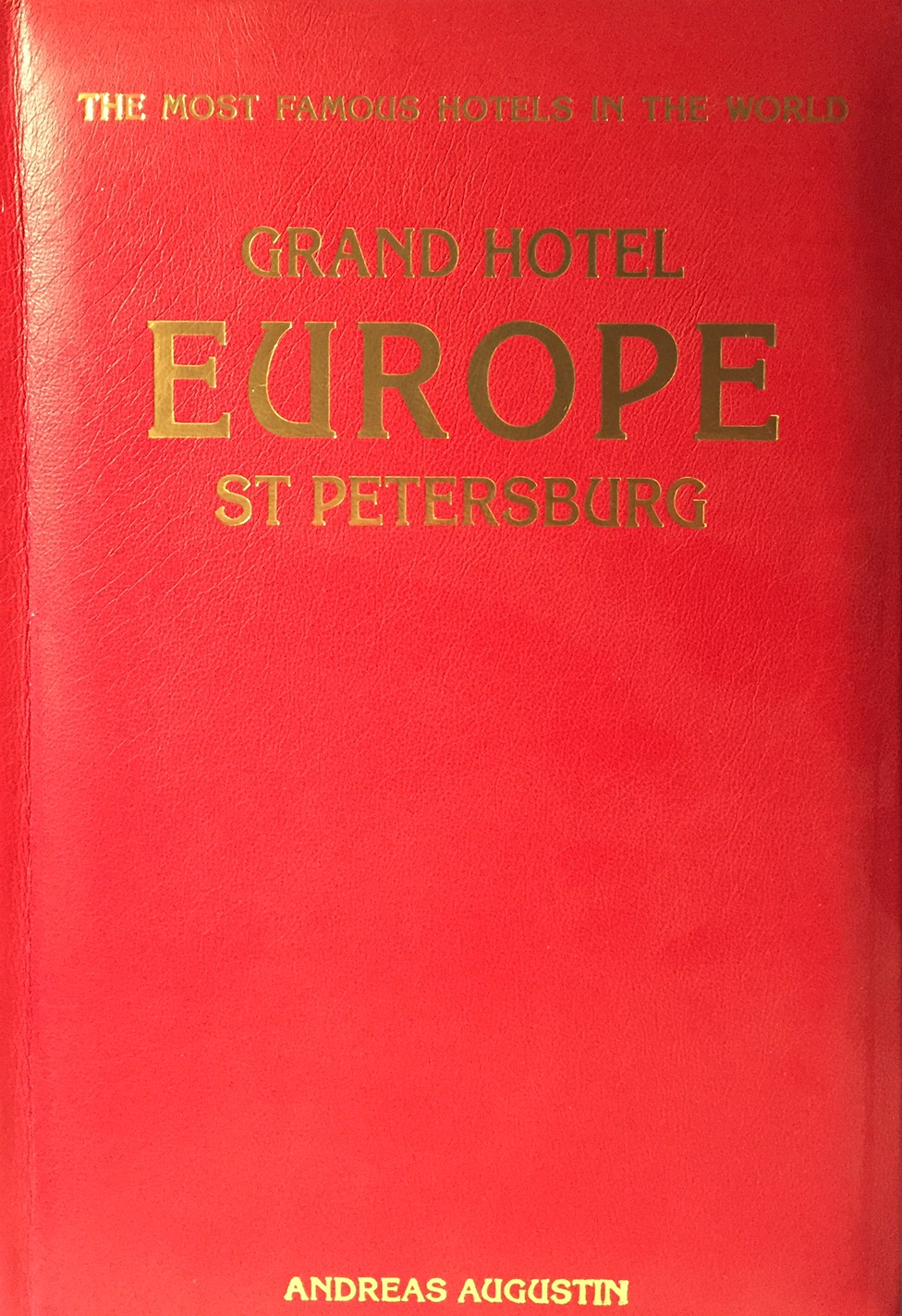
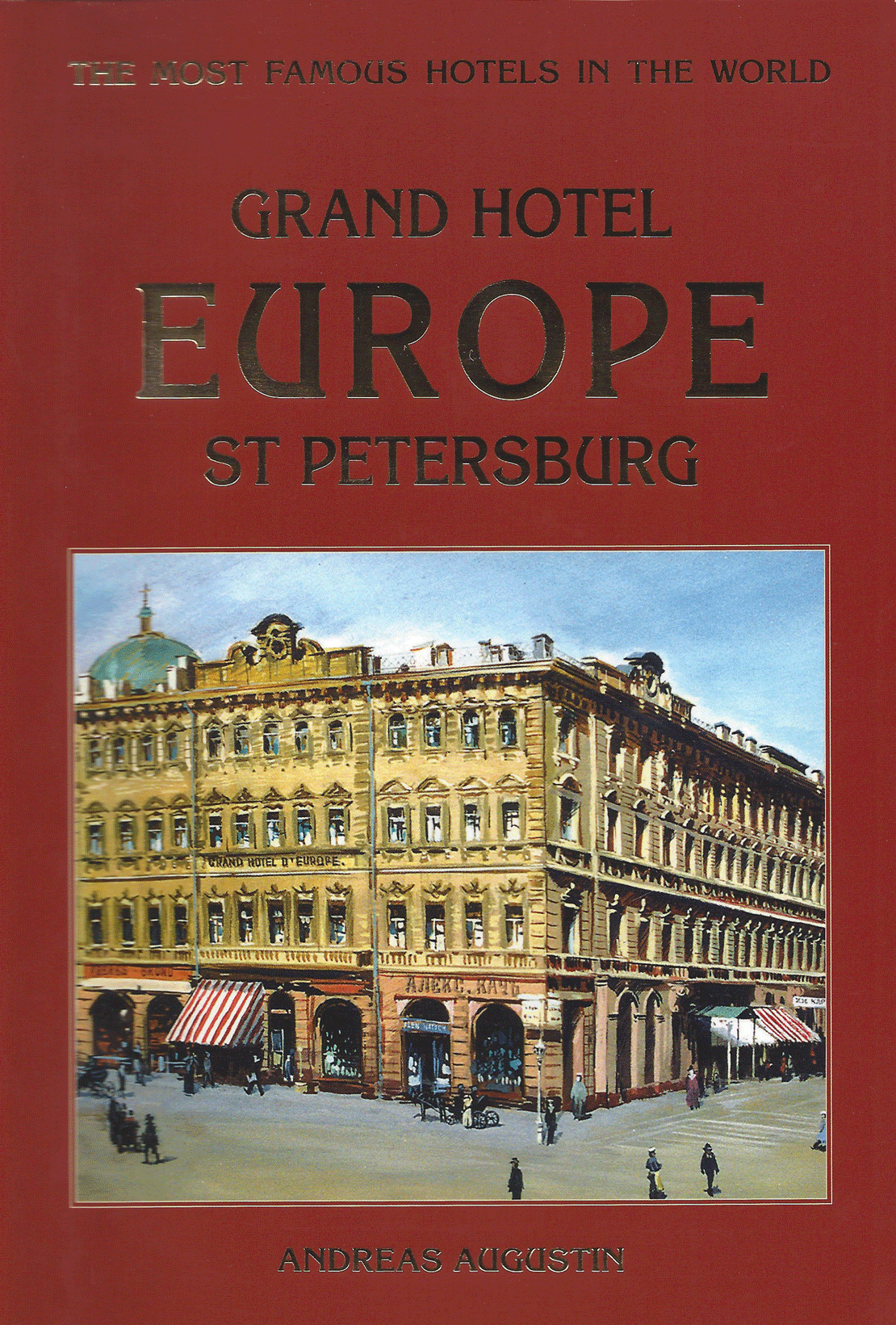
Grand Hotel Europe – St. Petersburg, Russia (English Leather Edition)
Author
Andreas Augustin
Pages
160
Photographs
Illustrations
over 160
Leather-bound edition
No
Binding
Hardcover (real cloth bound/gold stamping)
Includes
2 postcards, 2 reading marks (HIS and HERS)
ISBN
978-3-900692-22-3
Size/Weight
160 x 235 mm, 720 g
Related Hotel
Price: € 133.00
Add to cartAa a collector's item, this book has been bound by hand in leather of various colours.
Along Nevsky Prospekt and Mikhailovskaya Street stretches one of the finest hotels of the continent: the Grand Hotel Europe. Ever since it opened its doors in 1875, it has stood as testimony to the excellence of Russian hospitality. The tsarists regarded it as their playground, the Communists turned it into the 'House of the Soviet Clerk' and perestroika changed it into Russia’s first five-star hotel. The great master of Russian music, Pyotr Ilyich Tchaikovsky spent his honeymoon there, Johann Strauss occupied "comfort room No 26" for 14 days, for Turgenev there was no better place in the whole of St Petersburg, Rasputin dined there, George Bernard Shaw met Maxim Gorky in a private dining room, tenor Enrico Caruso advised soprano Luisa Tetrazzini to go on and to become the "soprano of the world", Dimitri Shostakovitch played a sonata for Sergey Prokofiev in his suite, Elton John performed at the restaurant, President Clinton took a rest for four hours in the Lidval Suite. Jane Fonda cooked her own food there. Queen ElizabethII praised the hotel’s kitchen and - talking about Royals: the Romanovs, Russia's eminent tsars family, is still gathering at the Grand Hotel for family reunions! Where else? This is the story of a beautiful city and the legend of Russia’s oldest grand hotel.
Welcome to the Grand Hotel Europe, Sir,’ the doorman says, the pride in his voice apparent. The term ‘Grand’ is certainly a fitting one in terms of the hotel’s reputation, its historic stature, and its physical presence. The façade of the hotel stretches 160 meters along Mikhailovskaya Ulitsa (Street), from the bustling Nevsky Prospekt to the peaceful Arts Square where the statue of Pushkin stands. St. Petersburg, constructed on over 30 islands, is the ‘Venice of the North’ (© Théophile Gautier, page 41).
With its palaces, churches and monuments, this city is certainly one of the most beautiful historic settings on earth. We are staying at the Grand Hotel Europe, the hotel where Tchaikovsky spent his honeymoon, where George Bernard Shaw saw Maxim Gorky and where Dmitri Shostakovich played a sonata for Sergei Prokofiev. Let us lean back in one of the comfortable armchairs at the Lobby bar and savour the atmosphere of this grand hotel. While we listen to the piano player, our minds wander back to the days when St Petersburg was the capital of the mighty Russian Empire. In the mid-19th century, S.t Petersburg had about 600,000 inhabitants.
Within the first years of the Grand Hotel Europe’s existence – it opened in 1875 – this figure rose to over 800,000. The city was the hub of six railways (described in the Encylopedia Britannica, 1889 as ‘two towards West to the Gulf of Finland and to Port Baltic’ (today Estonia), ‘two towards Warsaw and Moscow and two short ones to Oranienbaum and Tsarskoye Selo’). The city was the centre of science and fine arts. Its Academy of Sciences rendered important services in the exploration of Russia, the Pulkovo astronomical observatory’s yearly publications enjoyed a great reputation, the Society of Naturalists and the Physical and Chemical Society issued invaluable publications. Four medical societies and an Archaeological Society, a 120 years old Commercial Society, a Technical and Navigation Society, they all were of great importance. St. Petersburg’s music conservatory gave superior musical instruction, making the city – with one Imperial theatre for the ballet and one for the opera – the cradle of Russian opera, ballet and music. At the public library a collection of over one million books could be found, including 50,000 ‘Rossica’ (everything published in Russia). 120 periodicals were circulated (the right to publish political papers was in the hands of very few editors and severe censorship made it harder every day). The Hermitage Art Gallery contained a fine collection of the Flemish school and some Russian paintings, some good specimens of the Italian, French and Spanish schools and invaluable treasures of the Greek and Scythian antiquities.
This was St. Petersburg when the hotel opened. Follow me, my dear fellow traveller, into the story, the tales and legends of this grand hotel.
Andreas Augustin
Andreas Augustin
presents
The Grand Hotel Europe St Petersburg
in the series
The Most Famous Hotels In The World
This book was compiled and written at the Grand Hotel Europe in St Petersburg, in London and in Vienna.
Very special thanks go to Stephan Kaminski, general manager of the Grand Hotel Europe in 1996, who made this book possible, and to Brigitte T Gruber, who suggested it in the first place.
Thanks in loose order to: Elmar Greif, Peter Knoll , Snezhana Zamalieva, Yana Lakizina, Ulrich Wilhelm, Marina Alexandrova, Tiffany Madden, Natalia Minina, Tim Ettelt, Detlef Krenzin, Paul Murphy, Anthony Gear, Albrecht Schäfer, Eugene Iakovlev, Ralph Katthöfer, Martina Bruehl and Sabine van Ommen.
We thank Larissa Gavrova and Igor Bogdanov for their valuable help during the research in St Petersburg. We are also especially grateful to Wladimir B Geracemov, who shared with us some good old Grand Hotel stories and to Kaapralova Lidea Fedorovna at the Saltikov-Shedrin Russian National Library. We are very grateful to Viktoria Struzman, the architect of the renovations of the hotel who explained her work to us.
Last but not least many thanks to all the others who have contributed so generously to this book.
All rights in this publication are reserved. No part of this book may be reproduced, stored in a retrieval system or transmitted in any form or by any means, electronically, mechanical, photocopying, recording, or otherwise without the prior permission in writing of the copyright owner. All historical images have been restored and are under copyright.
The right of Andreas Augustin to be identified as the author of this work has been asserted by him in accordance with the Copyright, Designs and Patent Act 1988.
Photographs: Archives of the Grand Hotel Europe, Historical Archives of the Humanist Centre, the Saltikov-Shedrin Russian National Library, all St Petersburg;
Sabine van Ommen Public Relations, Berlin; and the Main Archives of The Most Famous Hotels.
Cover painting: Evgeniy Rusinov; Vignette, page 3: Andrey Tron
Research: Carola E. Augustin, Andrew Williamson
Editor: Francesca Brizi and Thomas Cane
© The Most Famous Hotels in the World, 1996, 2002, 2007
For more information about
The Most Famous Hotels in the World
www.famoushotels.org
info@famoushotels.org
Grand Hotel Europe – St. Petersburg, Russia (English)
Relevance: 43 matches (100%)
A fine leather bound edition of this book is available. Updated, with sparkling new photographs and an even richer collection of histor...
Hotel Kämp – Helsinki, Finland (English)
Relevance: 4 matches (9%)
Welcome to the Daughter of the Baltic Sea, as Helsinki is nicknamed. And a very warm welcome to Hotel Kämp, Finland's luxuriou...
London Hilton on Park Lane – England (English)
Relevance: 4 matches (9%)
Overlooking Hyde Park, London Hilton on Park Lane stands tall but never still. In 1963, when it opened its doors, the London Hilton w...
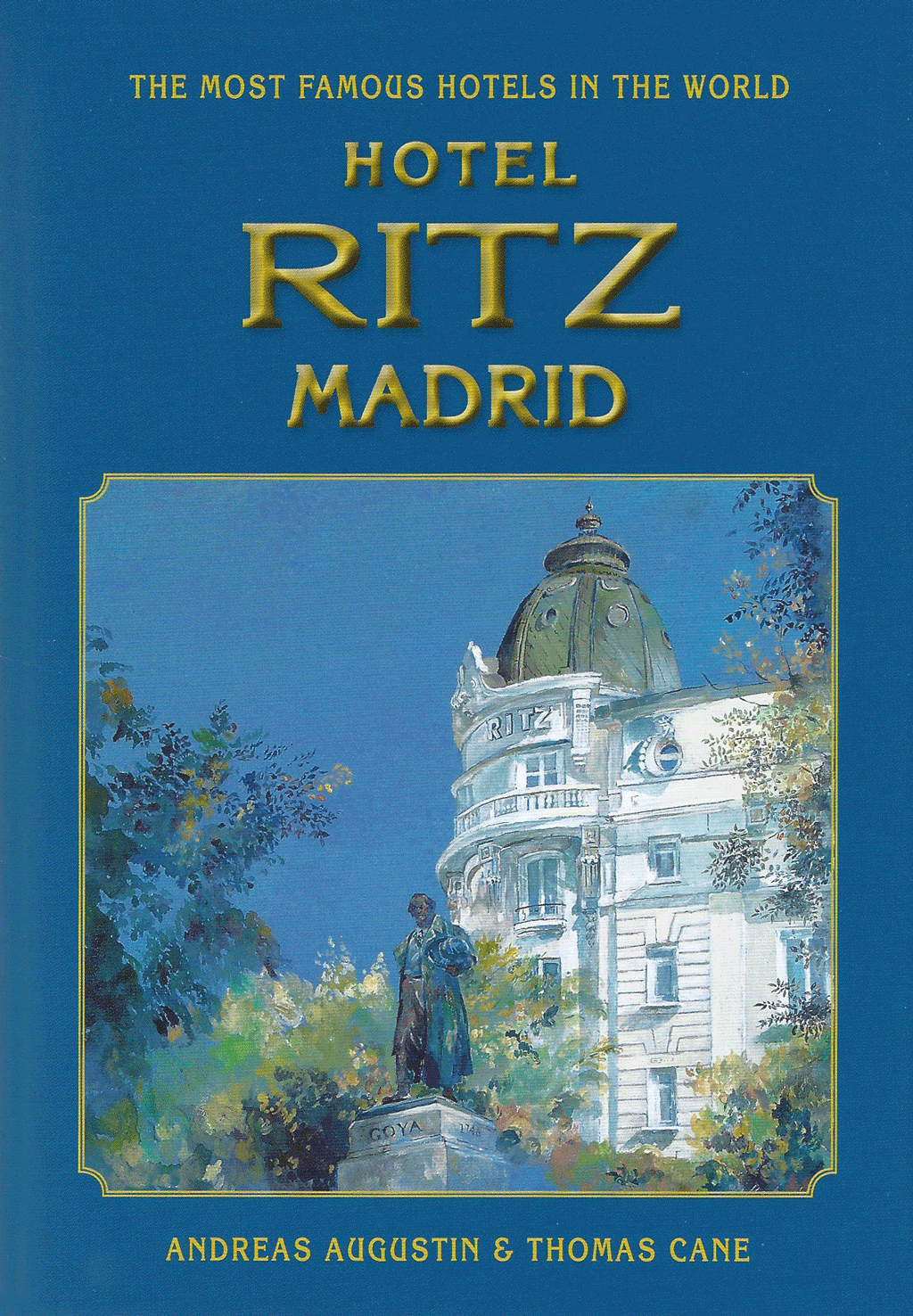
Ritz – Madrid, Spain (English)
Relevance: 4 matches (9%)
The Ritz Madrid was built in 1910, following the hotel-concept of the legendary César Ritz. Ritz is a synonym for quality, for e...
Hotel Kämp – Helsinki, Finland (Finish)
Relevance: 4 matches (9%)
Tervetuloa Helsinkiin, Itämeren tyttären syliin. Tervetuloa Hotel Kämpiin nauttimaan Suomen ylellisen vieraanvaraisuuden...
Ritz – Madrid, Spain (Spanish)
Relevance: 4 matches (9%)
Ritz. — Mucho más que un nombre. Sinónimo de calidad y excelencia y eufemismo que describe un mundo fuera del alcan...
Dear wonderful Readers;
Do you reserve time to read and to prepare your next journeys? This year look out for our new book GRAND HOTEL LVIV (Ukraine) — a bold statement of civil resistance in a war-torn country.
THE GALLE FACE TREASURY takes you to the exotic island of Sri Lanka. It's one of my heartfelt memories of a wonderful hotel, its owning family and staff. But also it's fantastic history — being the mousetrap for every traveller of note who travelled from West to the South Eastern regions of Asia.
I recommend the new edition of HOTEL METROPOLE HANOI.
The first copies of THE HALF MOON TREASURY are being released – exclusively to our readers (and before its official launching date).
We have released a reprint of our successful book THE WESTIN EXCLESIOR ROME, the most famous hotel on Via Veneto.
Upon request, we dispatch all our books personally autographed (as you know).
Have a save journey!
Andreas Augustin
aa at famoushotels dot org
Le Royal
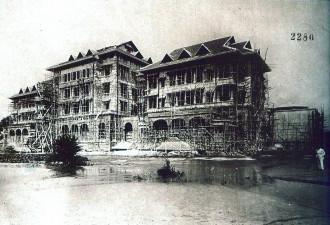
In 1923/24, the construction of a 55-room hotel in Phnom Penh was proposed. Architect Ernest Hébrard, who was largely responsible for...Read More
Frankfurter Hof
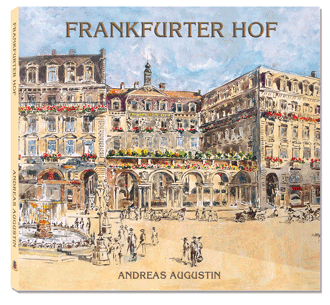
Whenever I am in Frankfurt, I have always been seeking a chat with head concierge. Later I find myself sitting on the terrace in the charming...Read More
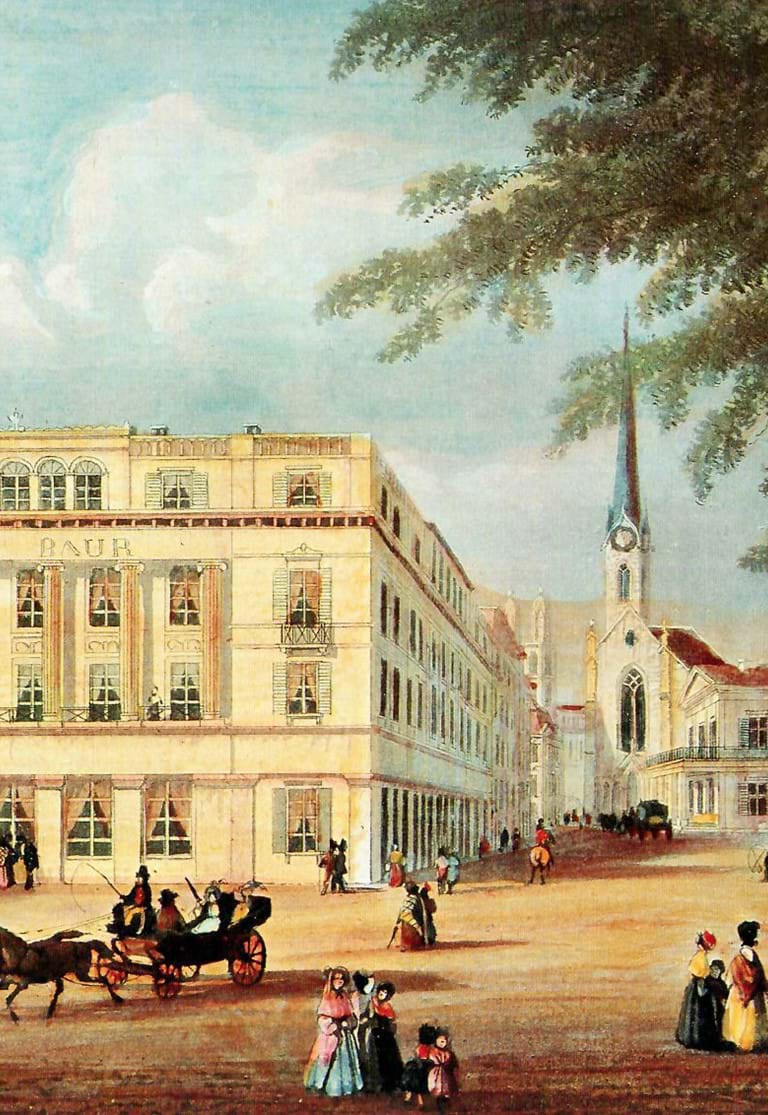
Baur, former Savoy Baur en Ville, today Mandarin Oriental Savoy Zurich
Johannes Baur, born in Austria in 1795, was a visionary entrepreneur who profoundly shaped Zurich’s hospitality industry. In 1837, at the age...Read More
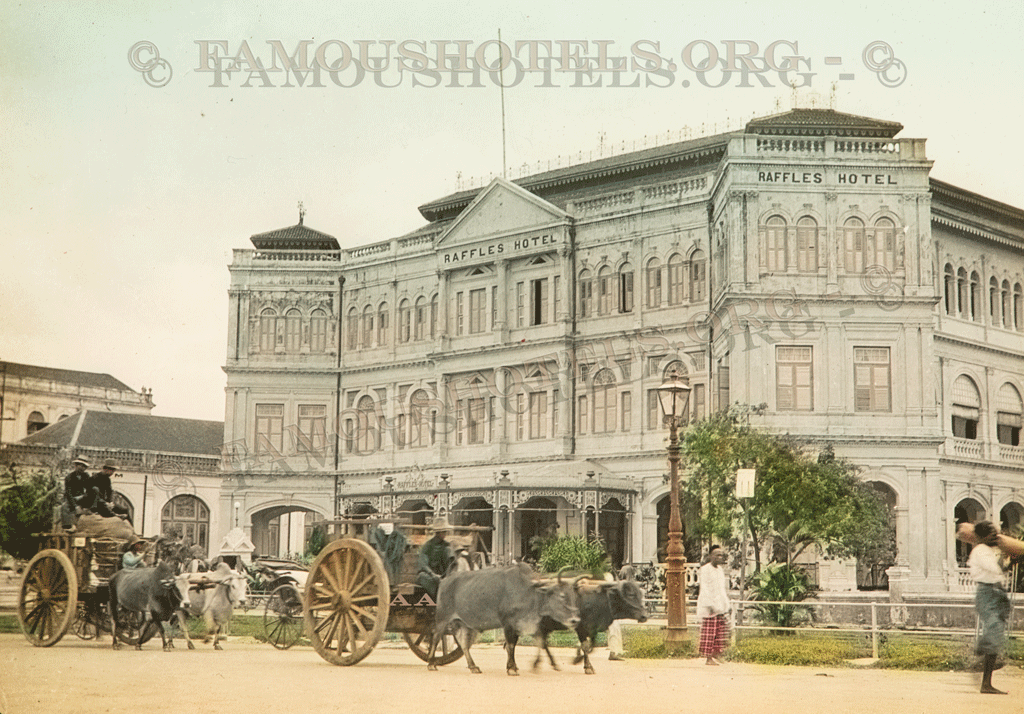
Raffles Hotel
The historic building (top, slide to the right): The "new" Raffles main building in 1899. It opened on 18 November 1899, featuring the all new...Read More
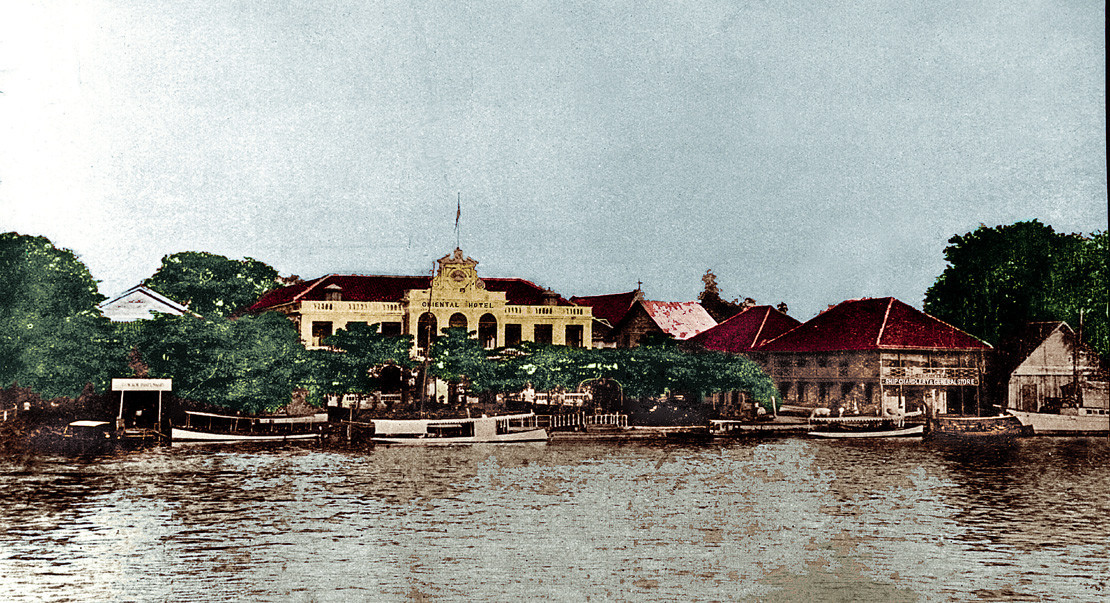
Oriental Hotel (Mandarin Oriental Bangkok)
Since decades “The Oriental”, as it is affectionately known by travellers from all over the globe, leads the lists of most...Read More