
Hotel Imperial – Wien / Vienna, Österreich / Austria (bilingual Deutsch / English)
Author
Andreas Augustin
Pages
144
Photographs
Illustrations
410 historic and contemporary pictures and illustrations; Cover painting and postcards by Manfred Markowski
Leather-bound edition
No
Binding
Hardcover with dust jacket
Includes
1 postcards, 1 reading ribbon
ISBN
978-3-900692-46-9
Size/Weight
245 x 225 mm, 880 g
Also available in
German/English
Related Hotel
Price: € 53.00
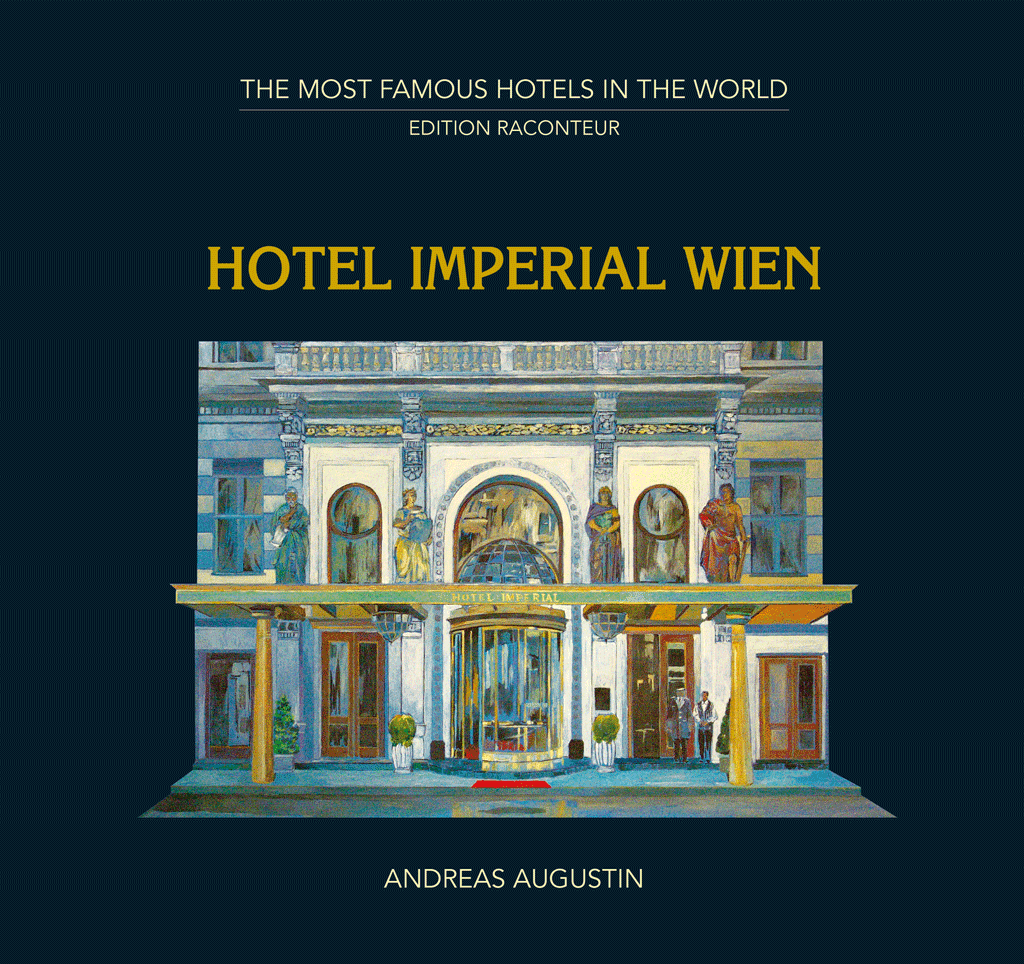
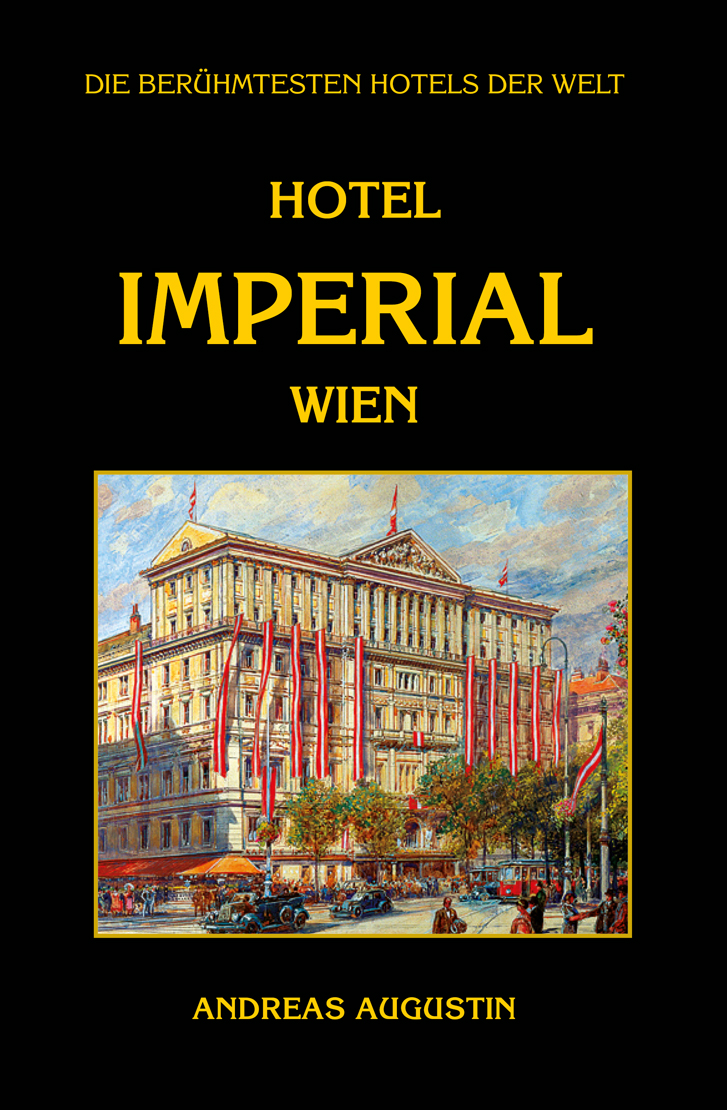
Add to cart One of Vienna's most famous palaces has been turned into a hotel. That was in 1873. The decade preceding this change saw Vienna under construction. Franz Joseph, a young and dynamic emperor, had the Ringstrasse built. One architectural jewel after another emerged around this necklace of stone: the City Hall, the Burgtheater, the Parliament, the Vienna State Opera. Here, too, stood the luxuriously appointed private palace of the Prince of Württemberg. But the prince sold his palace, and in 1873 it was converted into a hotel. The Imperial.
Its central location, magnificent furnishings and first class management immediately make it Vienna’s leading hotel, the establishment frequented by officials of state, great artists and international travellers. The Imperial’s outstanding cuisine puts it in a league with the finest restaurants on the continent. Richard Wagner lived here for weeks. It was Bismarck's Viennese residence.
Charlie Chaplin thought it the finest hotel he had ever lived in, an opinion shared by the Queen of England. All Vienna’s most distinguished visitors have resided at the Imperial, from state visitors to celebrated tenors. When in Austria, they like to stay in the Royal Suite, one of the most beautiful and grandest hotel suites in the world. This book presents you the history of a unique Viennese institution, from the 1870s to the present day; a look behind the scenes of a hotel which is one of the finest in the world.
This book is bilingual (English and German).
Notizen eines Reisenden
Im 1873 – HalleNsalon hängt der größte Maria Theresia Luster der Welt. Es sind eigentlich drei Luster, die zu einem zusammenwachsen sind. Man verrät mir, er hätte 7764 verschieden große österreichische Kristallteile. 288 Lampen erleuchten ihn. Zusammengestellt wurde er von Isaac Glas in Verona.
2014 wurde der „Komponisteneingang“ von der Bösendorferstraße zum offiziellen zweiten Eingang und somit der 1873 – HalleNsalon zum zentralen Treffpunkt im Herzen des Hotels. Die Eingangshalle präsentiert sich glanzvoll renoviert, das Café Imperial modernisiert, das „Opus“ (wie es die Wiener bald nennen werden) ersetzt das alte Restaurant Imperial. Zum ersten Mal grüßt nun in der Empfangshalle die Familie Württemberg von den Wänden – ein charmanter Querverweis auf 150 Jahre Geschichte.
Traveller‘s Notepad
7764 different Austrian made crystal tears hang from the majestic Maria Theresa chandelier at the 1873 – HalleNsalon. 288 light bulbs are in it. It was built by Isaac Glass Verona.
2014 saw the opening of the new composers’ entrance, now open to all hotel guests. The 1873 – HalleNsalon became a true meeting point in the heart of the hotel, the lobby has received a face lift, too. The Café Imperial has been modernised and Opus, a new restaurant, replaces the former Imperial restaurant. For the first time the Württemberg family greets visitors from the walls – a rather charming reference to 150 years of history.
Wir danken für die Unterstützung bei der Produktion dieses Buches.
We thank the following people involved in the production of this book.
Klaus Christandl, Erhard Noreisch, Dr. Petra Engl-Wurzer
Archiv / Hotel Imperial: Michael Moser
Oscar del Campo, Thomas Schön, Riccardo Giacometti, Daniela Stoppel, Michael Hatzfeld, Franz-Josef Macho, Josef Prosek, Martina Barreto-Schabler, Wolfgang Panzer, Thomas Gattinger, Evert Schuele, Viktoria Arnold, Ilona Holzer, Caroline Müller, Andreas Bienenstein, Rupert Schnait, Siegfried Kröpfl, Heidar Fityani, Stefan Hierzer, Harald Hitner, Harald Fuchs, Stefan Weber, Sylvester Huber, Marielle Millowitsch, Andrea Konert, Philip S. Rosenstingl, Harro Schott, Manfred Grassauer, Gregor Hasengschwandtner, Friederike Kozelsky-Schara, Matthias Brunner, Franz Giefing, Marek Gajewski und viele andere.
Besonderer Dank an Friederike Matschinger und Ralf Bernhart.
Fotos: Bill Lorenz, Archiv des Hotel Imperial, Jaime Ardiles-Arce, David Peters, Fotozentrum K. Reiberger, Atelier Doris Kucera, pictures born / H. Nessler, Thomas Vockenhuber, Matthias Hamel, Archiv der Österreichischen Nationalbibliothek (Bildarchiv Austria), Archiv Dr. M. La Speranza, Wien, Famous Hotels Main Archives, Vienna, Musikverein / Peter Schramek, Privatsammlung Hedi Graf, Siegfried Lauterwasser (Herbert von Karajan / Karajan Zentrum Wien), Professor Adolf Frohner, Dave Davis (Tinted History), Jakob Tuggener Foundation, Tretick, Stanley (Kennedy), Allan Warren (Peter Ustinov), Wolfang Bohusch (Valsassina Ensemble), Marion Dönhoff Stiftung (Marion Dönhoff). Alba Communications GmbH/APA-Fotoservice/Hinterramskogler
Assistenz in der Geschichtsforschung: Dr Andrew Williamson, Dr Marcello de la Speranza, Mag Carola Augustin
Das erklärte Ziel war es, einen geschichtlich korrekten, aber doch möglichst unterhaltsamen Überblick zu vermitteln. Dieses Werk erhebt also keinerlei Anspruch auf Vollständigkeit.
Historische Fotografien wurden entsprechend restauriert und koloriert und sind daher Gegenstand des Urheberrechtsgesetzes. Jede Verwertung von Teilen dieses Werkes unterliegt der ausdrücklichen schriftlichen Zustimmung von The Most Famous Hotels in the World.
All historic data has been carefully selected during research with the objective of providing a general historical overview. This work does not therefore claim to be complete. Historic photographs have been restored and occasionally tinted, and are therefore – together with the entire work – subject to copyright.
The reproduction and distribution of any part of this work without the explicit written consent of The Most Famous Hotels in the World™ will be prosecuted.
Concept & Design: Ramazotti Michelangelo
Gesamtleitung: Andreas und Carola E. Augustin
Copy editor (English): Thomas Cane
ISBN: 978-3-900692-46-9
© The Most Famous Hotels in the World® / Andreas Augustin
aa@famoushotels.org | www.famoushotels.org
EDITION RACONTEUR by famoushotels
1st edition © 2014
Imperial – Vienna, Austria (English Leather Edition)
Relevance: 97 matches (100%)
Only 50 books of this edition were bound in leather by our dedicated bookbinders. They arrive autographed by the author. Vienna aroun...
Imperial – Vienna, Austria (English)
Relevance: 97 matches (100%)
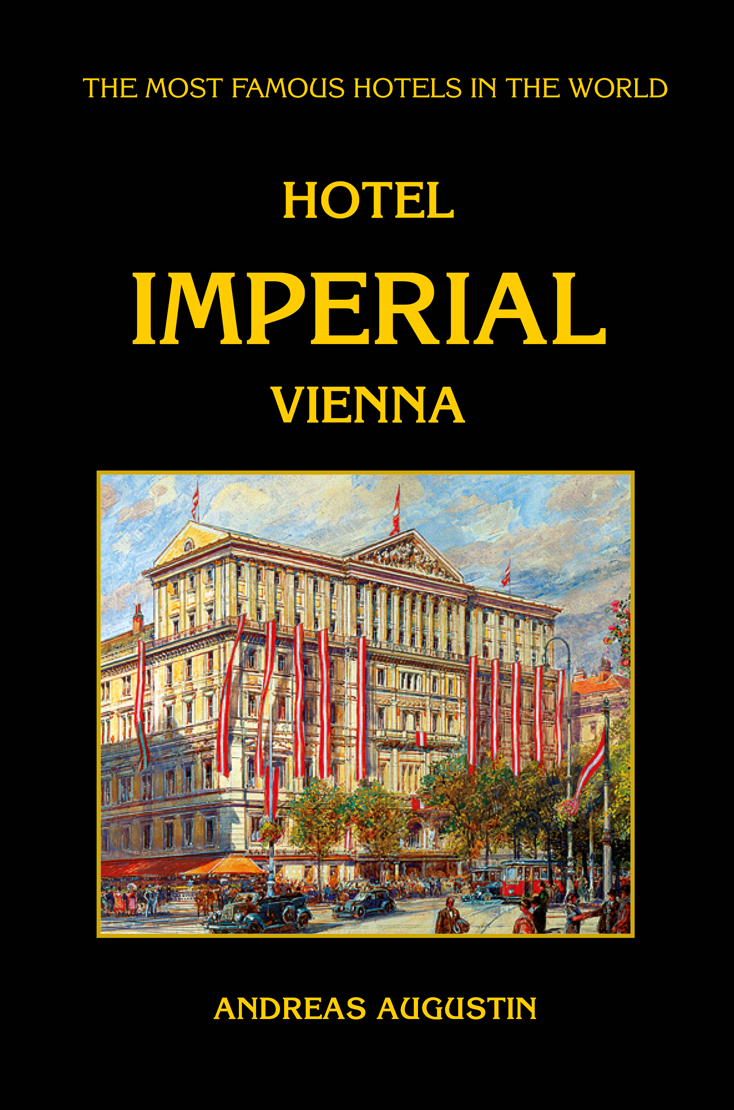
Vienna around 1860. A city under construction. Franz Joseph, a young and dynamic emperor, has the Ringstrasse built. One architect...
Imperial – Wien, Österreich (Deutsch)
Relevance: 97 matches (100%)
Wien um 1860. Eine Stadt im Aufbruch. Franz Joseph, ein junger, dynamischer Kaiser, lässt die Ringstraße bauen. Das Stein ge...
The Cafe Central Treasury – Vienna/Wien, Austria/Österreich (English/Deutsch)
Relevance: 12 matches (12%)
This book is bilingual (Deutsch & English): Heinrich Ferstel built it, the world visits it. The Café Central at the Palais F...
Grand Hotel – Florence, Italy (English)
Relevance: 9 matches (9%)
This wonderful book is unfortunately sold out. Since 1866, the Grand Hotel stands proudly on the banks of the River Arno. During...
Hotel Bristol – Vienna, Austria (English)
Relevance: 8 matches (8%)
George Gershwin was working here on “An American in Paris”, the Maharaja of Patiala borrowed the Bristol’s chef for h...
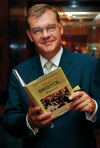
Dear wonderful Readers;
Do you reserve time to read and to prepare your next journeys? This year look out for our new book GRAND HOTEL LVIV (Ukraine) — a bold statement of civil resistance in a war-torn country.
THE GALLE FACE TREASURY takes you to the exotic island of Sri Lanka. It's one of my heartfelt memories of a wonderful hotel, its owning family and staff. But also it's fantastic history — being the mousetrap for every traveller of note who travelled from West to the South Eastern regions of Asia.
I recommend the new edition of HOTEL METROPOLE HANOI.
The first copies of THE HALF MOON TREASURY are being released – exclusively to our readers (and before its official launching date).
We have released a reprint of our successful book THE WESTIN EXCLESIOR ROME, the most famous hotel on Via Veneto.
Upon request, we dispatch all our books personally autographed (as you know).
Have a save journey!
Andreas Augustin
aa at famoushotels dot org
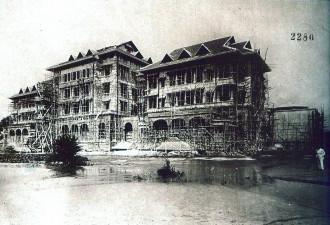
Le Royal
In 1923/24, the construction of a 55-room hotel in Phnom Penh was proposed. Architect Ernest Hébrard, who was largely responsible for...Read More
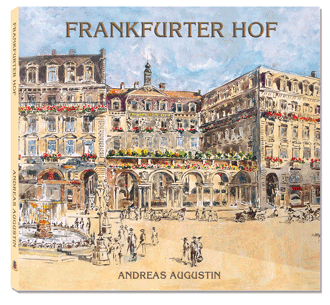
Frankfurter Hof
Whenever I am in Frankfurt, I have always been seeking a chat with head concierge. Later I find myself sitting on the terrace in the charming...Read More
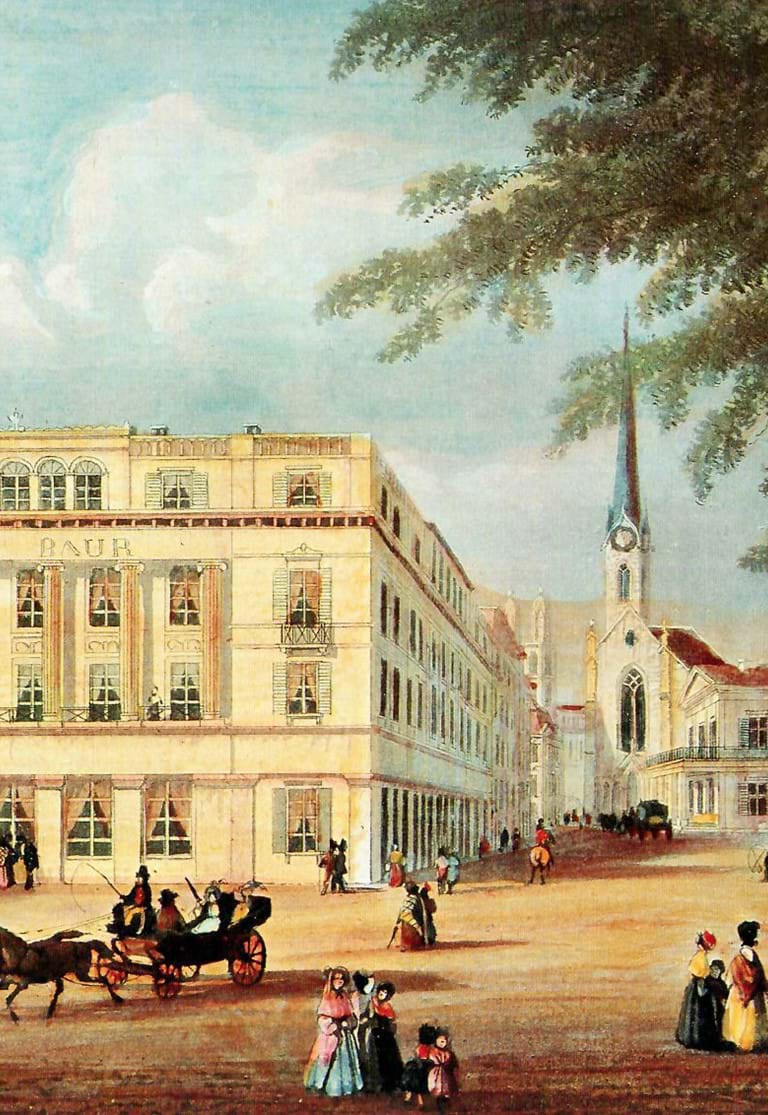
Baur, former Savoy Baur en Ville, today Mandarin Oriental Savoy Zurich
Johannes Baur, born in Austria in 1795, was a visionary entrepreneur who profoundly shaped Zurich’s hospitality industry. In 1837, at the age...Read More
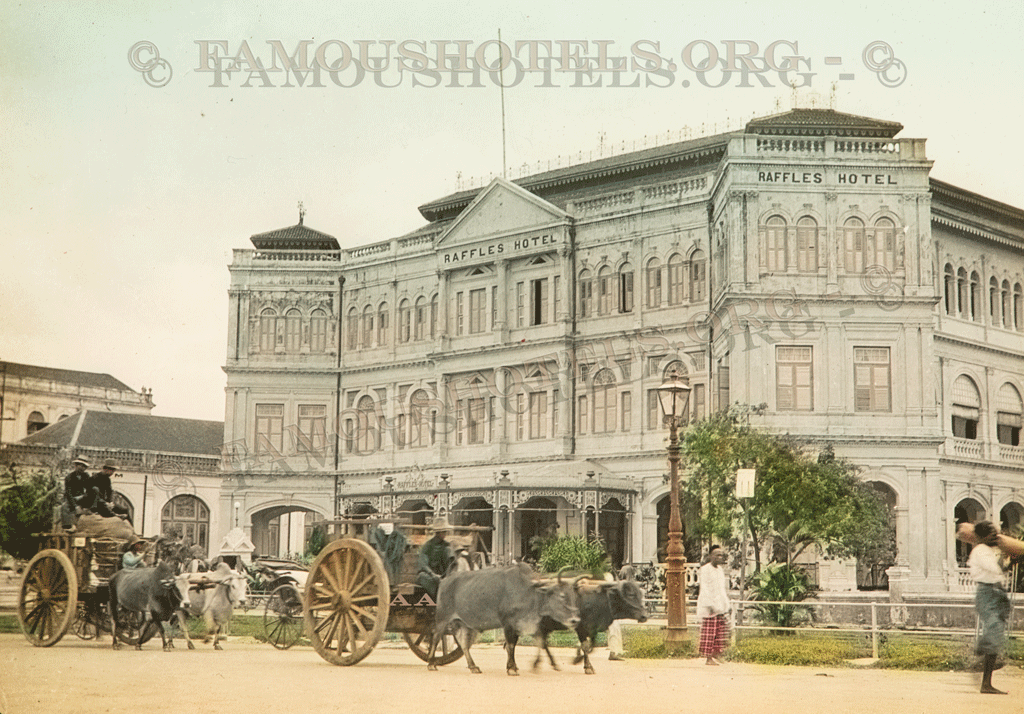
Raffles Hotel
The historic building (top, slide to the right): The "new" Raffles main building in 1899. It opened on 18 November 1899, featuring the all new...Read More
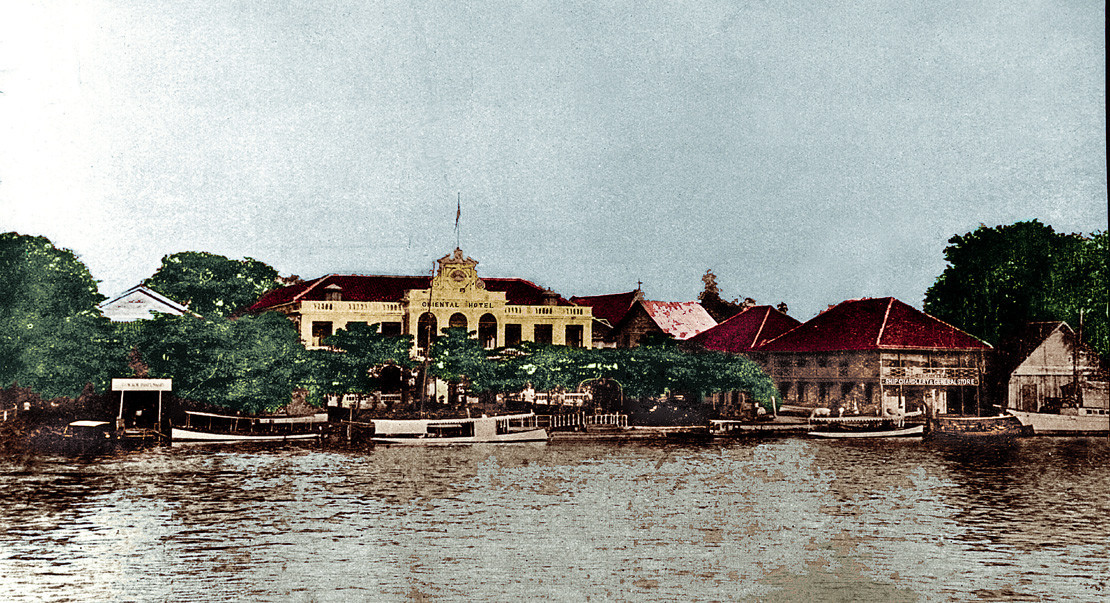
Oriental Hotel (Mandarin Oriental Bangkok)
Since decades “The Oriental”, as it is affectionately known by travellers from all over the globe, leads the lists of most...Read More