
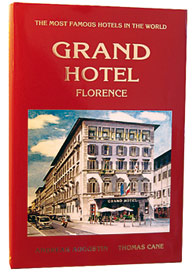
Grand Hotel – Florence, Italy (English)
Author
Andreas Augustin and Thomas Cane
Pages
160
Photographs
Illustrations
over 160 historic and contemporary photographs; Jaime Ardiles-Arce, cover painting by Peter Baldinger.
Leather-bound edition
No
Binding
Hardcover (real cloth bound / gold stamping / dust jacket)
ISBN
3-902118-11-3
Size/Weight
160 x 235 mm, 720 g
Related Hotel
This wonderful book is unfortunately sold out.
Since 1866, the Grand Hotel stands proudly on the banks of the River Arno. During its illustrious history, it has been the retreat of the most celebrated globetrotters past and present, all of them attracted to a famous hotel in a famous city.
This book dives deep into the history of Florence, from its origins as a major trading centre to its flowering as the birthplace of the Renaissance, and later to its development as a hub of global tourism. Housed in an old Renaissance palace, the Grand Hotel plays a key role in the gripping saga of Florence. From its prime location on the Piazza Ognissanti, it has for generations offered the city a window into the opulent world of royals, nobles, statesmen, artists and movie stars.
The Grand Hotel is a Florentine institution. Join the authors on a journey through time into the fascinating past of a unique city and its flagship hotel.
A perfect network of overnight sleeper trains connect major European cities with Florence. When my train pulled into Florence station, the first rays of the sun created this stunning silhouette of towers, domes and Tuscan hills. It was early morning, the streets still empty, the city sleepy; I walked to the Grand Hotel on the river Arno.
There is a collection of respectable coffee table books, among them the unrivalled classic The History of Italian Renaissance Art by the eminent Professor Frederich Hartt, next to an exquisite Leonardo volume, an exuberant Palazzi of Tuscany and the standard Firenze. No, I am not in the first and still the only English bookshop a few metres from the Grand Hotel in Borgo Ognissanti. These books are all prominently resting on a large square table in the lobby of the Grand Hotel. This is a hotel I trust.
It’s 13/7/13. That’s the next, however common, difference between a Grand Hotel and the rest of them. The staircases often gap more than five metres between the floors. With dozens of steps in between. At the Grand in Florence it is 13/7/13. 33 steps from one floor to the next. I walk them. For some time now, I have imagined an invisible signboard in front of every elevator saying: ‘This lift is provided free of charge for your convenience. The stairs are provided free of charge, too, for your health.’ And so I walk.
The butler service at the Grand Hotel elevates the hotel into the league of a select few around this globe. A bottle is elegantly opened on the balcony, laundry discreetly taken, trousers returned ironed. Right on time, while the bubbles of the champagne still ripple, the restaurant manager calls in to say that they have a new menu. ‘Why don’t you have dinner with us?’ Not long afterwards, I am sitting at my table under an umbrella in front of the Grand on the Piazza Ognissanti. The noise of the street has been reduced to the occasional car. I breath the air of the river Arno.
Here stands a seemingly modest church by the same name. It is only once you enter that you discover its splendour, its unexpected depth and a charming courtyard, with walls paved with frescoes. In the church lies the family tombstone of Amerigo Vespucci, the Florentine after whom America is named. Like the Grand Hotel, its exterior does not give away the grandeur that awaits you inside. It needs discovering.
Once you pass through the revolving door of the hotel, the hall leads you to its staircase. The next room opens to a splendid Winter Garden. Further stairs take you to one of the most beautiful ballrooms in Italy. Florence stands for the Medici, Dante, Michelangelo, Da Vinci, Machiavelli, Galileo . . . It was the cradle of modern mankind. Here, during the so-called Renaissance, the points were changed for Europe. Europe became the matrix for our world today. Before we dive into the history and the tales of this hotel, we will – in the tradition of our books – tell you about the history of the city.
How was the stage set?
Why was there a need for a hotel like this?
Why did the Nightingales name their daughter Florence?
I have asked British historian Thomas Cane to give us a brief history of Florence so that we all better understand how this city grew into its present shape. We shed light on the development of the hospitality industry of the 19th and 20th centuries. We will find out that the Grand Hotel today is the oldest still existing luxurious institution of hospitality in the city. It dates back to the year 1866, one of the most exciting periods in our recent history.
Please follow us...
Andreas Augustin
presents
Grand Hotel Florence
in the series The Most Famous Hotels in the World™
We would like to thank Dr Antonello de’ Medici, general manager, and Judith Otto, director of sales and marketing of the Grand Hotel and the Hotel Excelsior in Florence, who were the driving forces behind this history project.
Special thanks go to Francesca Govoni, who – in charge of public relations – assisted so valuably during the entire project.
It must be noted with greatest respect that the management of the hotel decided to accept historical facts rather than old legends and traditionally distributed myths.
We are in particular indebted to all former and current members of the staff, who contributed so generously to this book. We also like to thank Robert Koren, Giuliano Corsi, Marco Milocco, Monique Kraft, Gerardo Kraft and all the others who are not mentioned here by name.
Photographs: Archives of the hotel, Jaime Ardiles-Arce, Matteo Sandi, Andrea Ruggeri, Marco Ravasini, Pollazzi Foto, the private collections of Ellen Puccinelli Sannini and Andreas Schoellkopf, Famous Hotels Archives and the Antonio Deperte Collection.
Research assistance: Dr Sofia Reich, Cherry Chappell, Marina Bassino
Copy editor: Carola Augustin
All historic data have been carefully selected during research with the objective of providing a general historical overview. This work does not therefore claim to be complete. Historic photographs have been restored as necessary, and are therefore subject to copyright. The entire work, including such parts as the dust jacket, the enclosed postcards and bookmarks, are also subject to copyright.
Any form of storage using electronic media or distribution via a network is prohibited. Any reproduction of excerpts from this work without the explicit written consent of The Most Famous Hotels in the World™ will be prosecuted.
Note for publishers and authors
All the photographs used in this book are available as high-quality digital files. Please contact the archives of The Most Famous Hotels in the World (archives@famoushotels.org) and ask for these illustrations for your own publications.
© Copyright The Most Famous Hotels in the World™
Design: Ramazotti Michelangelo
St Regis Grand Hotel – Rome, Italy (English)
Relevance: 11 matches (20%)
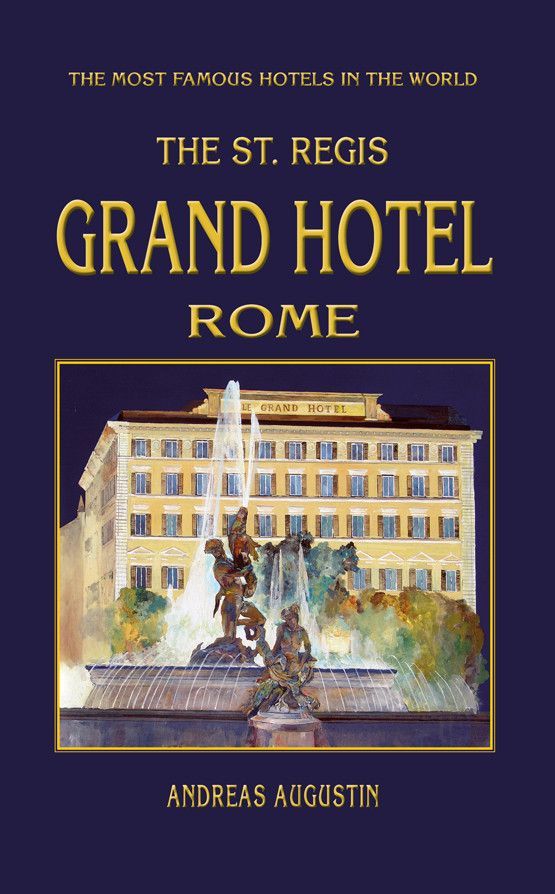
In 1894 Cesar Ritz opened the Grand Hotel as the most elegant hotel of Rome. Auguste Escoffier was his first chef. Diplomats, heads of ...
Imperial – Wien, Österreich (Deutsch)
Relevance: 10 matches (19%)
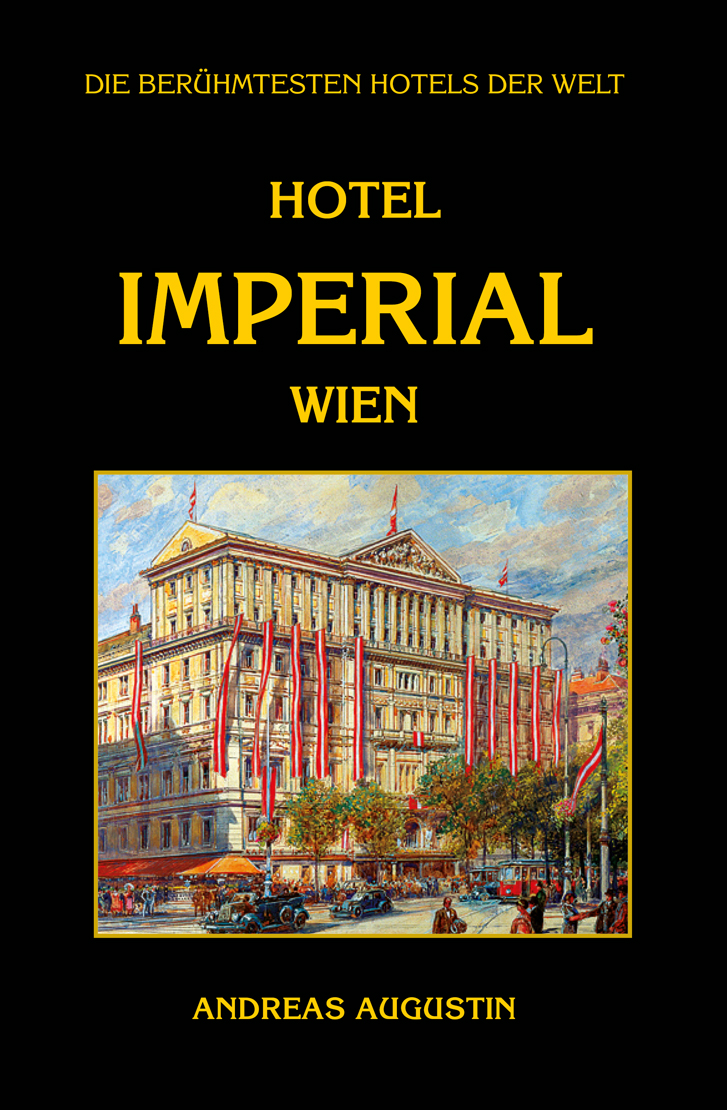
Wien um 1860. Eine Stadt im Aufbruch. Franz Joseph, ein junger, dynamischer Kaiser, lässt die Ringstraße bauen. Das Stein ge...
Imperial – Vienna, Austria (English)
Relevance: 9 matches (17%)
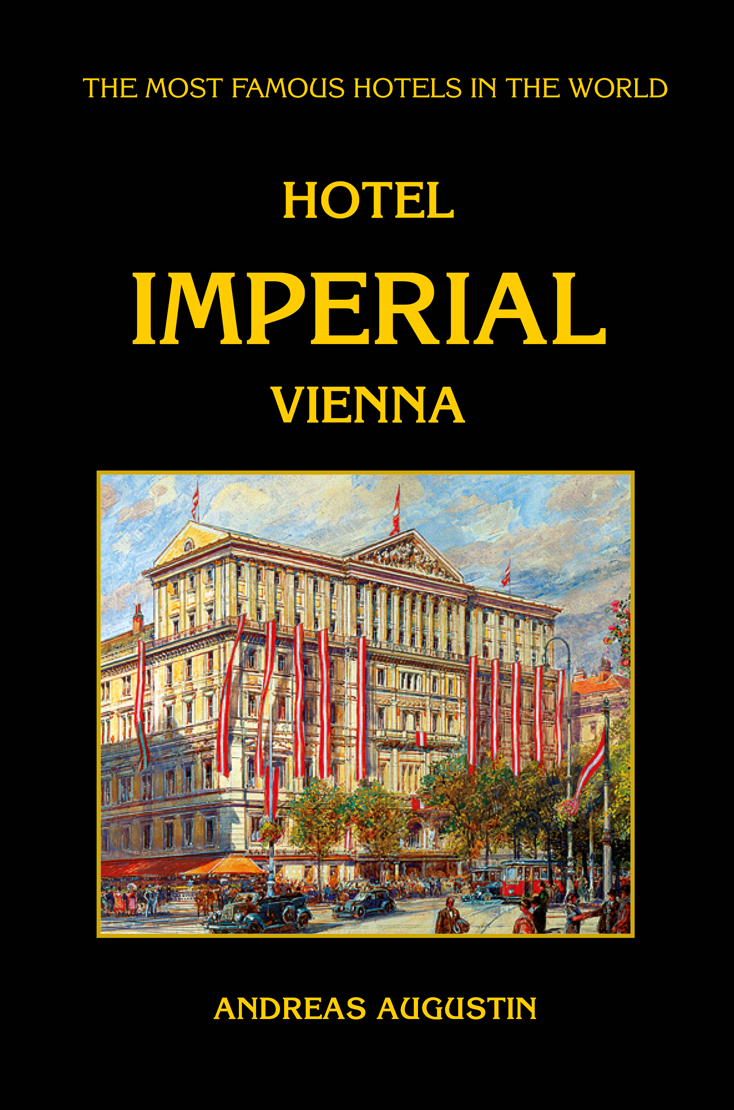
Vienna around 1860. A city under construction. Franz Joseph, a young and dynamic emperor, has the Ringstrasse built. One architect...
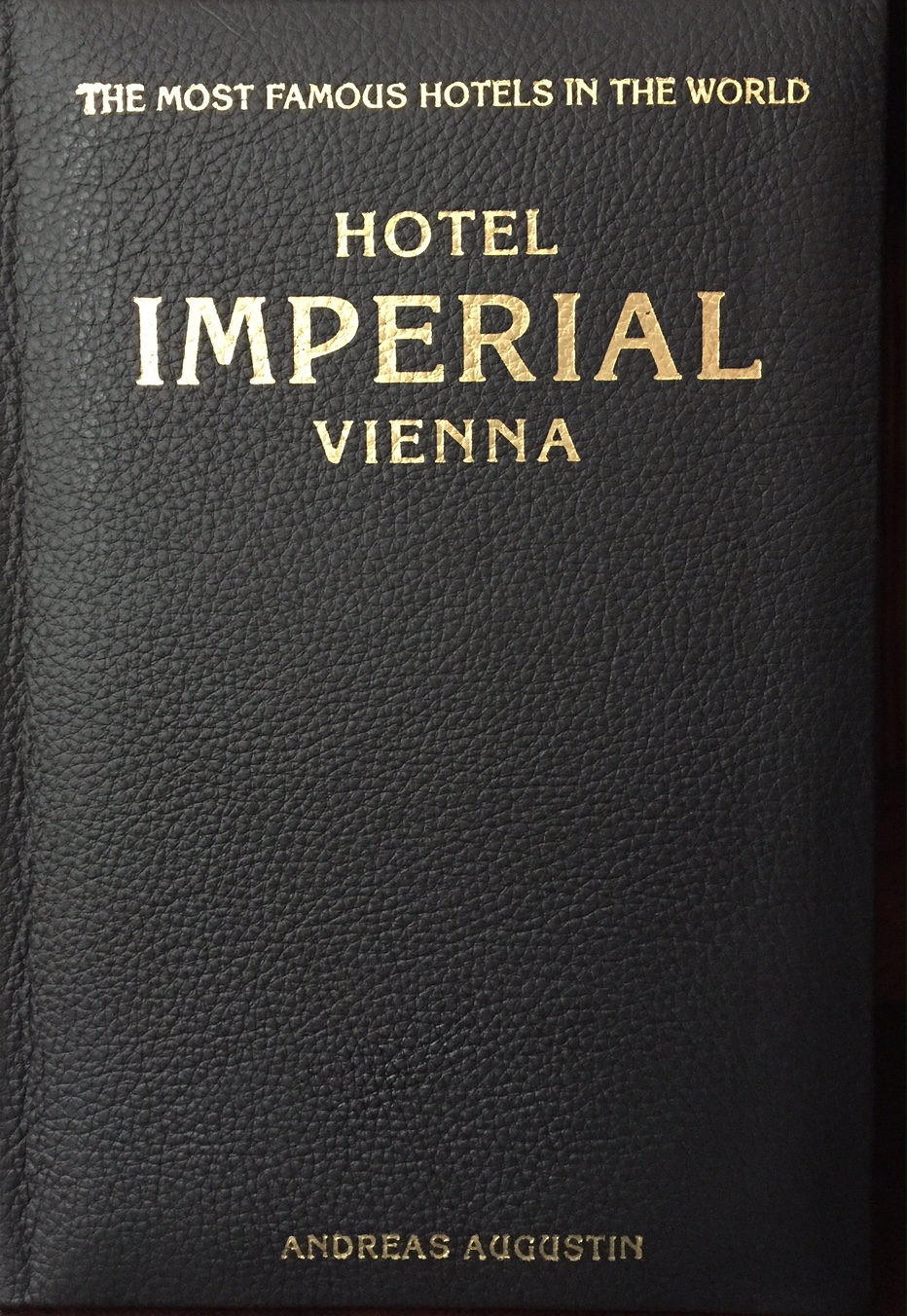
Imperial – Vienna, Austria (English Leather Edition)
Relevance: 9 matches (17%)
Only 50 books of this edition were bound in leather by our dedicated bookbinders. They arrive autographed by the author. Vienna aroun...
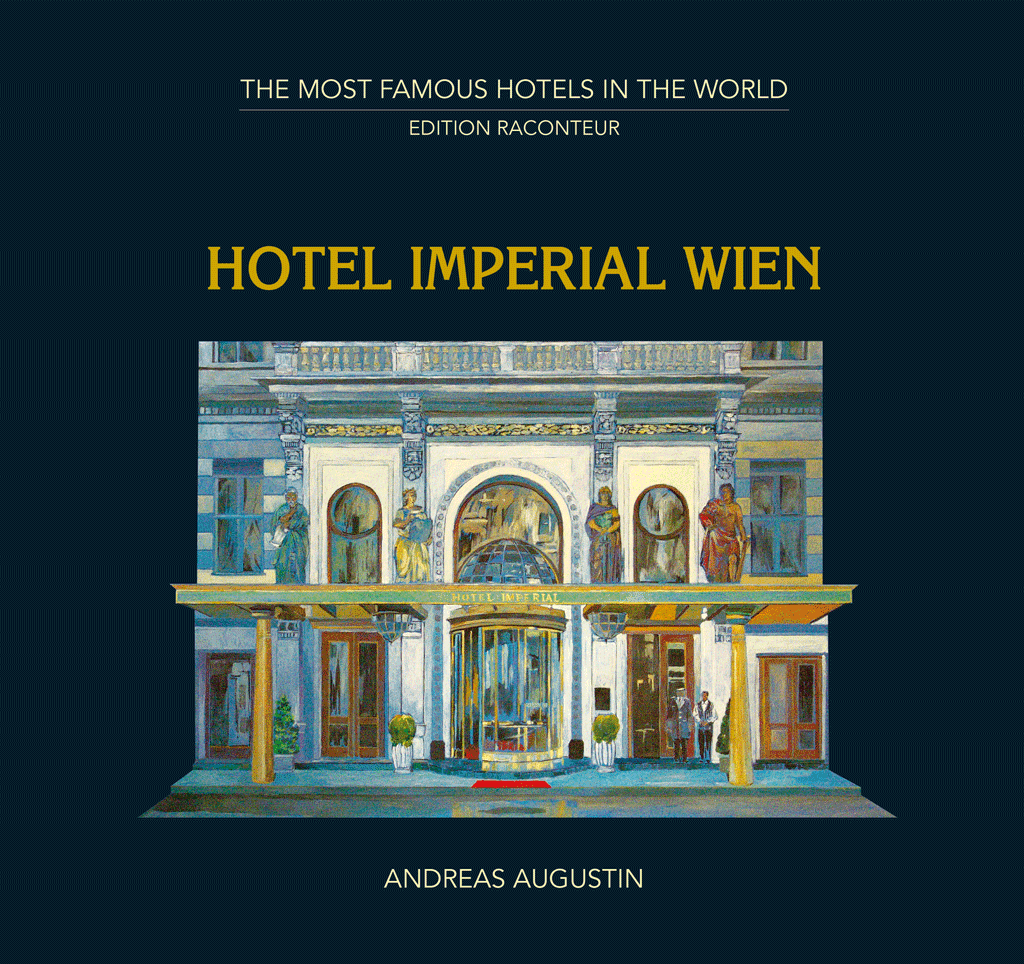
Hotel Imperial – Wien / Vienna, Österreich / Austria (bilingual Deutsch / English)
Relevance: 9 matches (17%)
One of Vienna's most famous palaces has been turned into a hotel. That was in 1873. The decade preceding this change saw Vienna und...
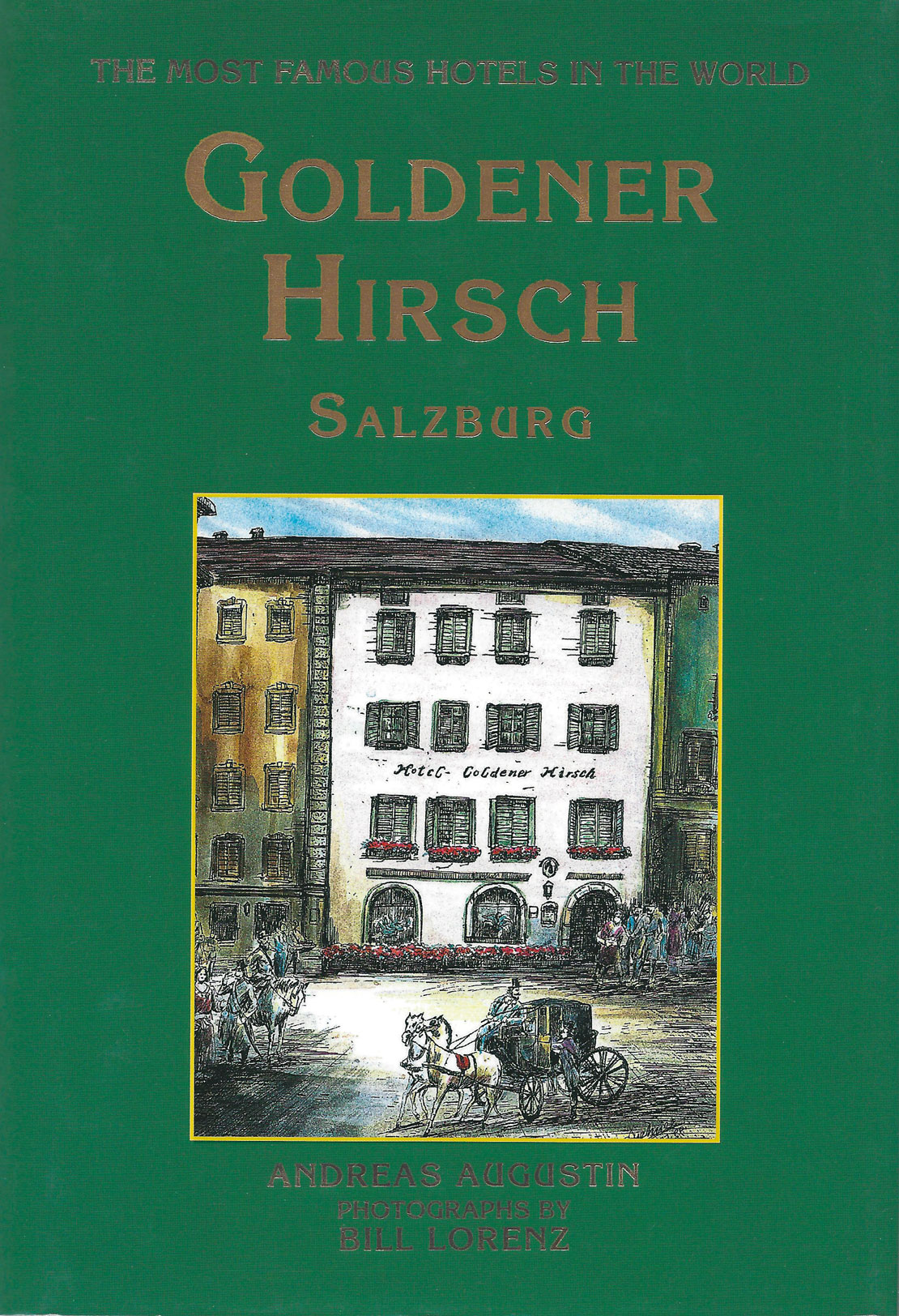
Goldener Hirsch – Salzburg, Austria (English)
Relevance: 6 matches (11%)
Since 600 years the Goldener Hirsch is a landmark of Salzburg, of Austria! This book tells the story of this hotel and the history of ...
Dear wonderful Readers;
Do you reserve time to read and to prepare your next journeys? This year look out for our new book GRAND HOTEL LVIV (Ukraine) — a bold statement of civil resistance in a war-torn country.
THE GALLE FACE TREASURY takes you to the exotic island of Sri Lanka. It's one of my heartfelt memories of a wonderful hotel, its owning family and staff. But also it's fantastic history — being the mousetrap for every traveller of note who travelled from West to the South Eastern regions of Asia.
I recommend the new edition of HOTEL METROPOLE HANOI.
The first copies of THE HALF MOON TREASURY are being released – exclusively to our readers (and before its official launching date).
We have released a reprint of our successful book THE WESTIN EXCLESIOR ROME, the most famous hotel on Via Veneto.
Upon request, we dispatch all our books personally autographed (as you know).
Have a save journey!
Andreas Augustin
aa at famoushotels dot org
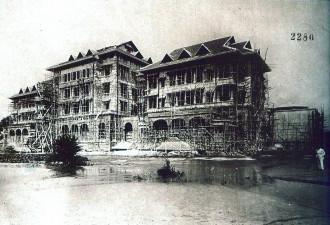
Le Royal
In 1923/24, the construction of a 55-room hotel in Phnom Penh was proposed. Architect Ernest Hébrard, who was largely responsible for...Read More
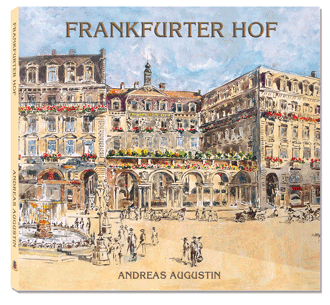
Frankfurter Hof
Whenever I am in Frankfurt, I have always been seeking a chat with head concierge. Later I find myself sitting on the terrace in the charming...Read More
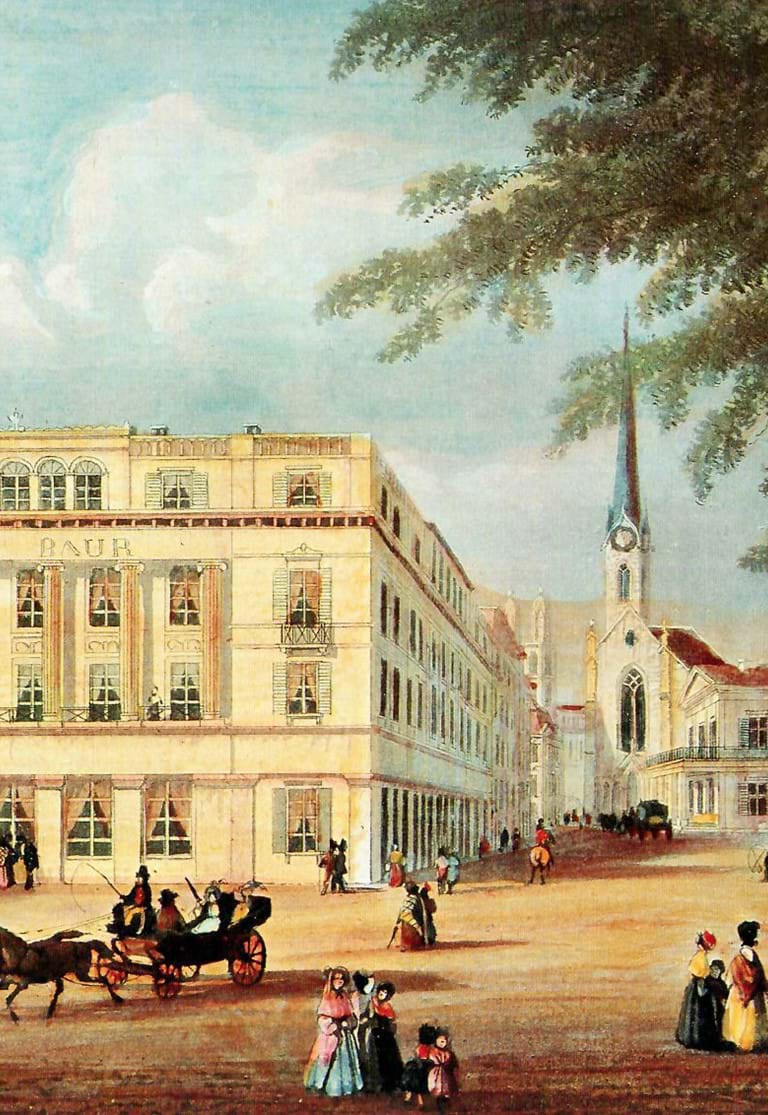
Baur, former Savoy Baur en Ville, today Mandarin Oriental Savoy Zurich
Johannes Baur, born in Austria in 1795, was a visionary entrepreneur who profoundly shaped Zurich’s hospitality industry. In 1837, at the age...Read More
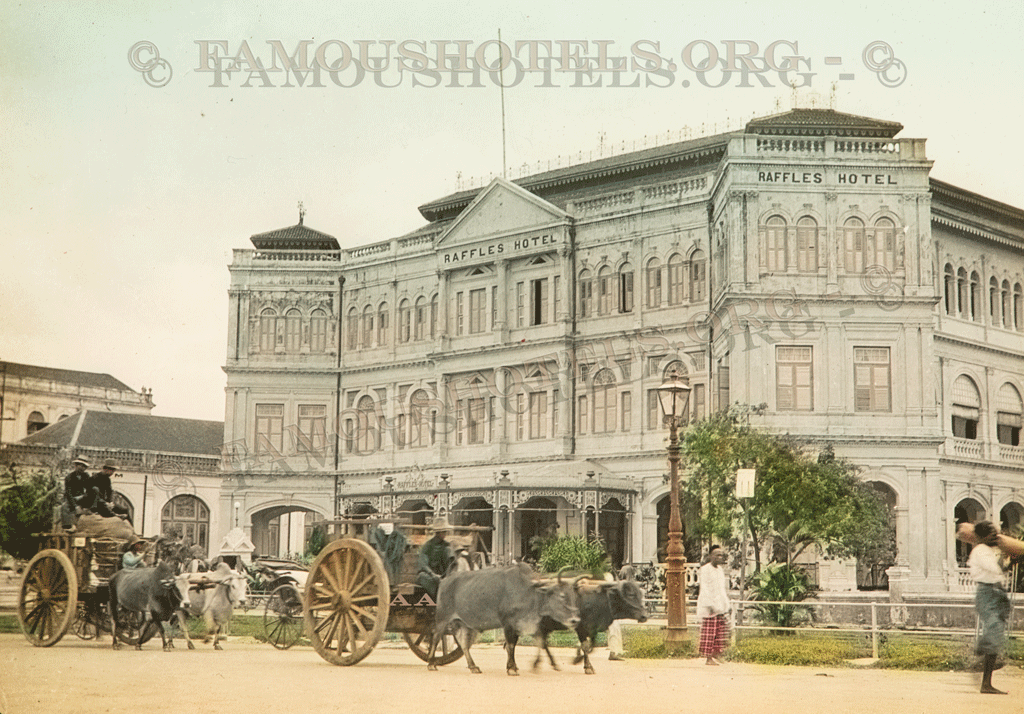
Raffles Hotel
The historic building (top, slide to the right): The "new" Raffles main building in 1899. It opened on 18 November 1899, featuring the all new...Read More
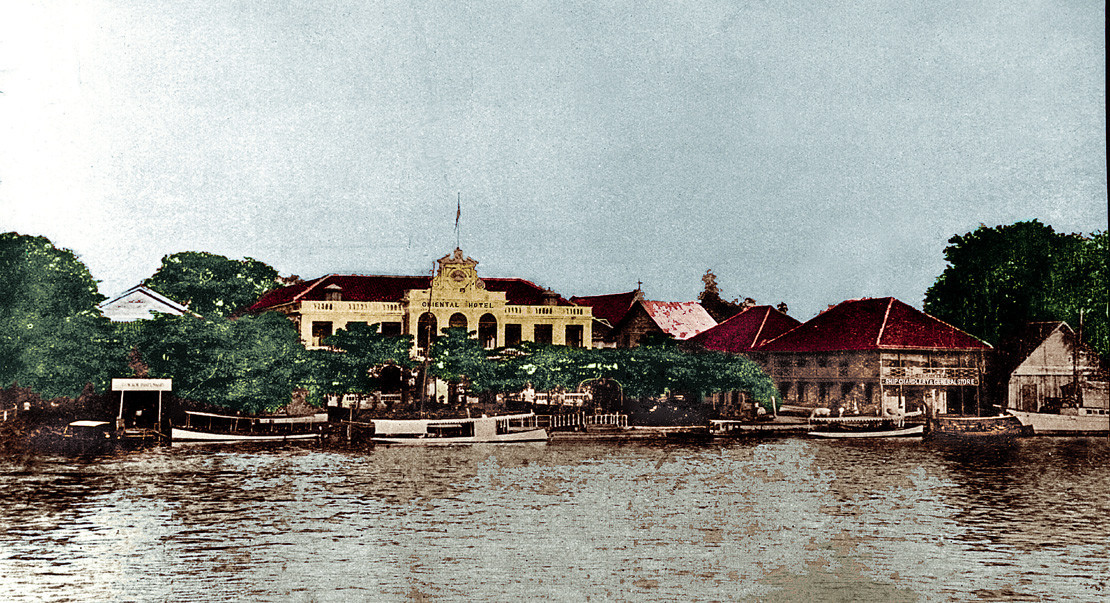
Oriental Hotel (Mandarin Oriental Bangkok)
Since decades “The Oriental”, as it is affectionately known by travellers from all over the globe, leads the lists of most...Read More